
Slowing Down the Fastest Man in the World.
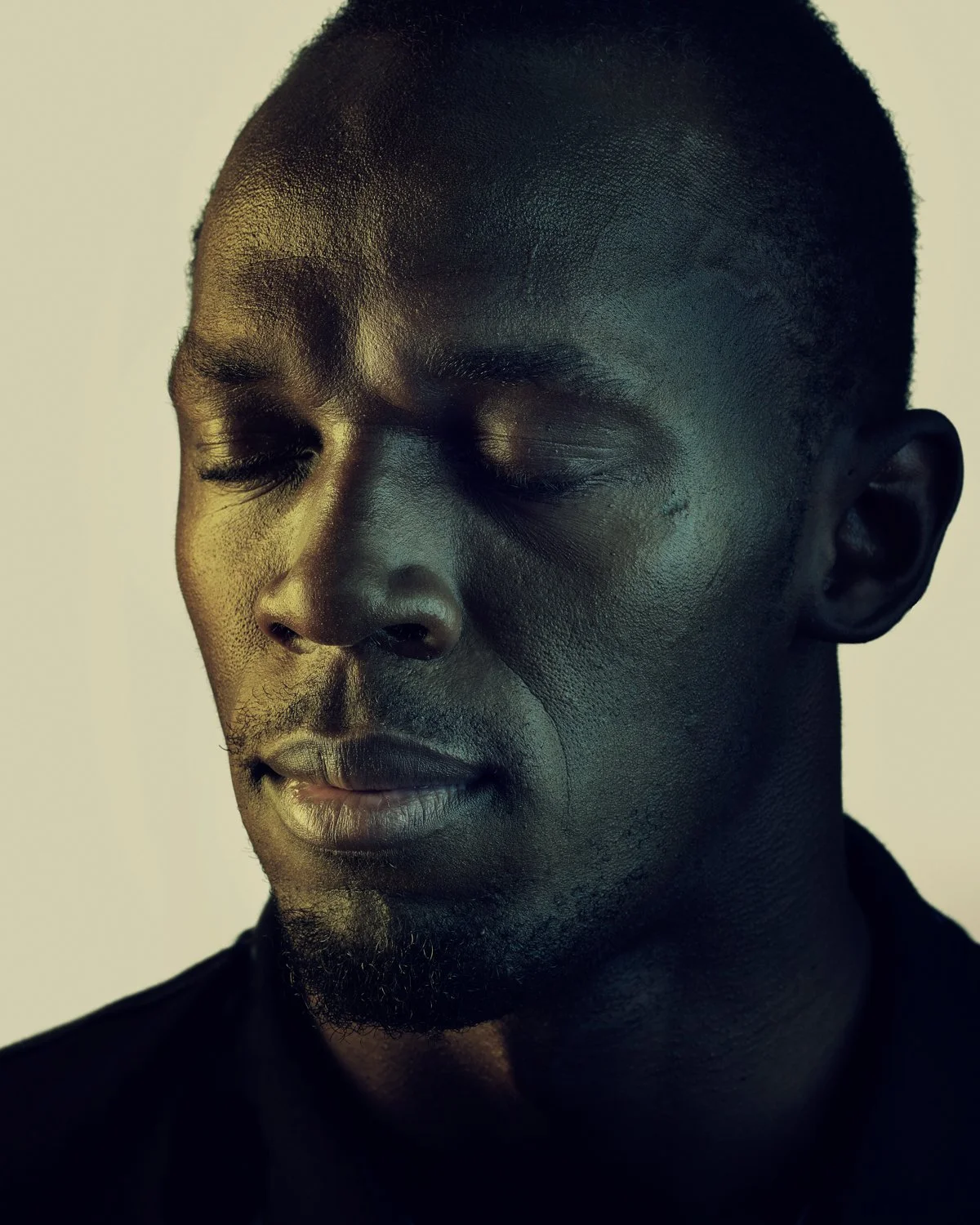
Usain Bolt, Kingston, Jamaica. 2015
I first met Usain Bolt in Kingston, Jamaica, while shooting a commissioned campaign and directing him in a television commercial. Like most people, I knew him through the public version of himself, explosive speed, huge charisma, the showmanship, the celebrations. The fastest man in the world felt larger than life long before he walked into the room.
What surprised me most was how relaxed he actually was. Very calm. Very easy-going. There was nothing frantic about him at all. In fact, the energy he carried was almost the opposite of what you might expect from someone whose entire identity is tied to movement and speed. He had a stillness to him.
The portrait was made in a makeshift studio setup in the outskirts of Kingston. Nothing overly elaborate. Just enough space, some controlled light and a quieter environment away from the activity of the commercial production. I often find that portraiture works best when things are stripped back slightly. Less noise. Less performance. Less trying.
When I photograph famous people, I’m usually searching for the space between how they are publicly perceived and who they actually are when the performance drops away for a moment. Particularly with someone as globally recognisable as Usain, there’s always the temptation to lean into the mythology. The big smile. The lightning bolt pose. The energy people already expect.
But I wanted to show a different side of him.
At one point during the sitting, I asked him to close his eyes. It was a very simple direction, but something shifted immediately. The image suddenly became quieter. More internal. Closing his eyes slowed everything down. For a brief moment, the fastest man in the world appeared completely still.
There was something strangely beautiful about that contradiction.
Portraiture often works like that. The smallest adjustment can completely change the emotional tone of an image. You realise very quickly that not every photograph needs complexity. Sometimes adding more only pushes you further away from the truth of the person standing in front of the camera.
Sometimes a portrait is just about simplifying things. A face. A gesture. Good light. A moment of stillness. That’s enough.
The older I get, the more I think portraiture is less about constructing an identity and more about removing distractions until something honest remains. The camera has a way of recognising when someone stops performing, even briefly.
That photograph of Usain Bolt remains one of my favourites for exactly that reason. Not because it shows the world’s fastest man as powerful or iconic, but because for a fraction of a second it shows him at rest.
Serene. Thoughtful. Human. And sometimes that’s the more interesting picture.